


 Send Inquiry
Digital Electrochemical Workstation
Price 2500000 INR/ Piece
MOQ : 10 Pieces
Digital Electrochemical Workstation Specification
- Mounting Type
- Tabletop
- Input Current
- 0.1 A 100 mA
- Protection Level
- IP21
- Rated Voltage
- 220 V
- Efficiency
- 90%
- Phase
- Single Phase
- Output Voltage
- 10 V
- Frequency
- 50/60 Hz
- Operating Temperature
- 10C 40C
- Humidity
- 80% RH
- Processing Type
- Standard
- Condition
- New
- Function
- Electrochemical Measurement, Potentiostatic/Galvanostatic Control
- Product Type
- Digital Electrochemical Workstation
- Dimension (L*W*H)
- 270 mm x 220 mm x 90 mm
- Power Mode
- Electric
- Power Consumption
- 25 W
- Accessories
- Standard Electrodes, USB Cable, Power Adapter, Software CD
- Warranty
- 1 Year
- Scan Rate
- 0.001 mV/s 1000 V/s
- Display Type
- Digital LCD Display
- Compliance Voltage
- 12 V
- Noise Level
- <2 Vrms
- Interface
- USB 2.0, RS232
- Supported Operating Systems
- Windows XP/7/8/10
- Calibration
- Auto/Manual Calibration
- Weight
- 2.8 kg
- Measurement Modes
- CV, LSV, DPV, SWV, CA, CP, EIS
Digital Electrochemical Workstation Trade Information
- Minimum Order Quantity
- 10 Pieces
- Payment Terms
- Cash in Advance (CID)
- Supply Ability
- 1000 Pieces Per Month
- Delivery Time
- 10 Days
- Main Domestic Market
- All India
About Digital Electrochemical Workstation
A Digital Electrochemical Workstation is a specialized instrument used in electrochemistry research and analysis. They support a wide range of electrochemical techniques such as cyclic voltammetry, chronoamperometry, chronopotentiometry, impedance spectroscopy, and more advanced methods like rotating disk electrode (RDE) or rotating ring-disk electrode (RRDE) techniques. It integrates multiple functionalities and capabilities tailored for studying electrochemical processes. These are designed with modular components, allowing users to expand functionality or add new capabilities as needed. Digital Electrochemical Workstation is an essential tool in fields such as battery research, corrosion studies, sensor development, and materials science, where precise control and measurement of electrochemical processes are critical.
Versatile Electrochemical Analysis
This workstation supports a broad array of measurement modes such as Cyclic Voltammetry (CV), Linear Sweep Voltammetry (LSV), and Electrochemical Impedance Spectroscopy (EIS). Its versatility caters to diverse analytical needs including corrosion testing, energy storage research, and sensor development.
User-Centric Design
Equipped with a clear digital LCD display and intuitive controls, the unit ensures ease of operation. Auto/manual calibration enhances measurement accuracy, while a compact tabletop form factor (270 x 220 x 90 mm) makes it suitable for busy laboratory environments.
Robust Connectivity and Compatibility
Seamless data transfer is accomplished through USB 2.0 and RS232 interfaces. Compatibility with Windows XP, 7, 8, and 10 allows effortless integration meaning you can swiftly set up the system on varied computers found in academic, industrial, or research labs.
FAQs of Digital Electrochemical Workstation:
Q: How do I calibrate the Digital Electrochemical Workstation?
A: The workstation offers both automatic and manual calibration options. You can perform auto calibration directly using the system menu, or choose manual calibration for more specific adjustments, ensuring consistent and accurate measurement results.Q: What measurement modes are available, and how can they be used?
A: The workstation features multiple modes including CV, LSV, DPV, SWV, CA, CP, and EIS. These modes are suitable for tasks such as reaction mechanism analysis, material characterization, and kinetic studies. Switching between modes is straightforward via the integrated software.Q: When is it necessary to use the USB or RS232 interface?
A: Use the USB 2.0 or RS232 interfaces to connect the workstation to a computer for real-time data acquisition, device configuration, or firmware updates. The choice depends on your computers available ports and data management preferences.Q: Where should the workstation be installed for best performance?
A: The workstation is designed for tabletop installation in laboratories. Ensure placement in a clean, dry environment with ambient temperatures between 10C and 40C and humidity not exceeding 80% RH for ideal operation and longevity.Q: What is the process for conducting electrochemical measurements?
A: Plug in the device, connect the appropriate electrodes, and launch the included software on your Windows PC. Select the desired measurement mode, configure parameters (such as scan rate), and begin data collection. Results are displayed digitally and can be exported for analysis.Q: Are there specific benefits of using this workstation for research applications?
A: Yes, the workstations high scan rate range, low noise, multiple measurement modes, and digital LCD display offer precise, versatile performance. Its robust connectivity, efficient calibration, and reliable data output make it ideal for advanced material science, electrochemistry, and biosensor research.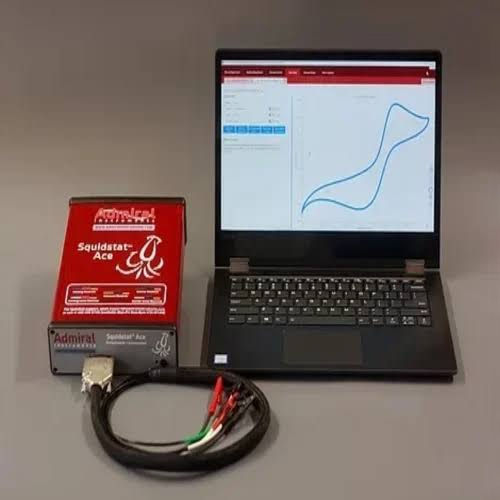
Tell us about your requirement

Price:
Quantity
Select Unit
- 50
- 100
- 200
- 250
- 500
- 1000+
Additional detail
Mobile number
Email


EON SCIENTIFIC
GST : 33AAKFE8709J1Z6

Eonscientific
(Proprietor)
Mobile : 07971549627

 Send Inquiry
Quick Link

Developed and Managed by Infocom Network Private Limited.
